MULTICARE: designing buildings for multiple hazards
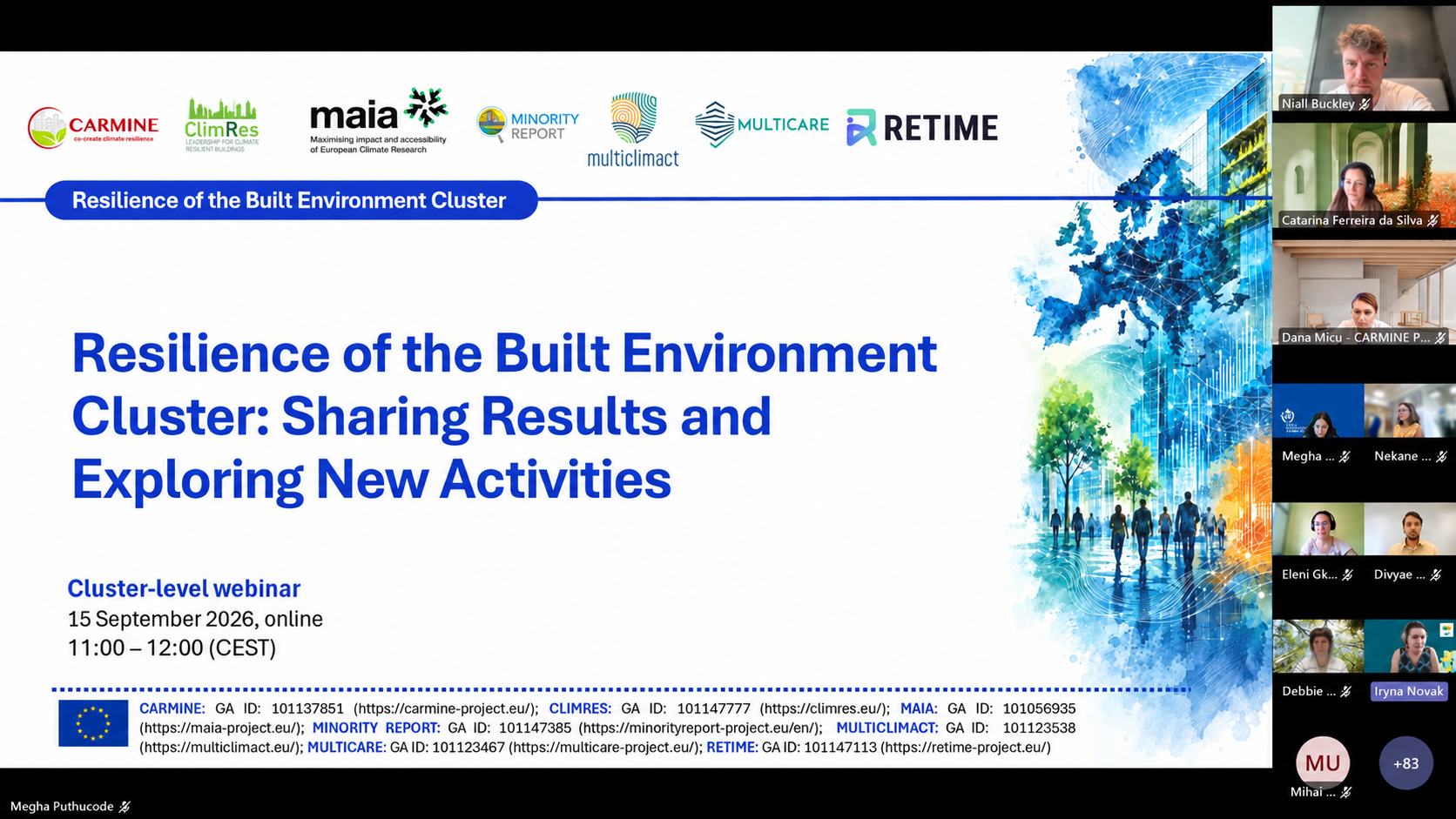
How can designers compare building options with overheating, flooding or earthquakes in mind? MULTICARE is developing digital tools to bring these questions into the early design process, when alternatives can still be explored. At a European cluster webinar on 15 September 2026, the project presented its approach to connecting design choices with resilience assessment.
Representing MULTICARE, Divyae Mittal from OMRT introduced two developments: a digital library of building components and a parametric design tool. Both aim to help researchers and designers explore how facade and building options perform against relevant hazards.
The webinar, “Resilience of the Built Environment Cluster: Sharing Results and Exploring New Activities”, brought together around 100 participants. Contributions from MULTICARE, CARMINE, CLIMRES, MINORITY REPORT, MULTICLIMACT and RETIME opened a discussion about making research tools useful for the people who design, own and manage buildings.
Exploring thousands of options with resilience in mind
Early design involves choices about building form, facade systems and materials. Each combination creates a different option to investigate. MULTICARE’s work explores how resilience assessment can become part of this process.
Mittal described a parametric tool being developed to generate 1,000 or more design options, depending on the parameters selected. In practical terms, parametric design uses adjustable inputs and rules to explore alternatives, allowing designers to examine how changes affect the assessed performance.
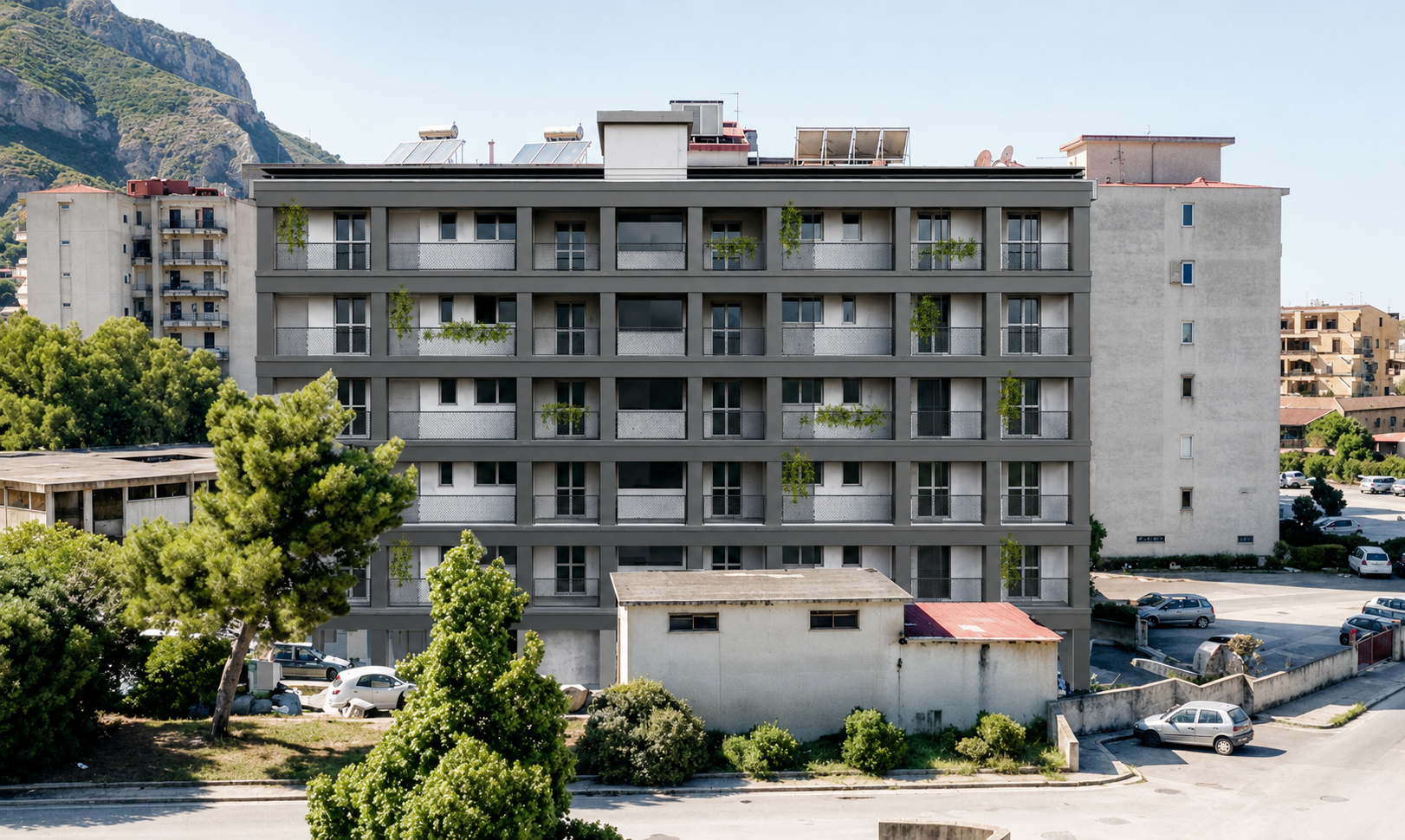
Amsterdam provided a concrete example. At this MULTICARE demonstration location, overheating is a concern. Mittal explained how the tool’s assessment can be adapted to that risk, with design alternatives generated according to the chosen parameters.
The value lies in connecting those alternatives to a relevant question: how could different design choices help address the risk being assessed? For architects and facade designers, this offers a way to investigate resilience while a proposal is still taking shape.
A component library linking materials and performance
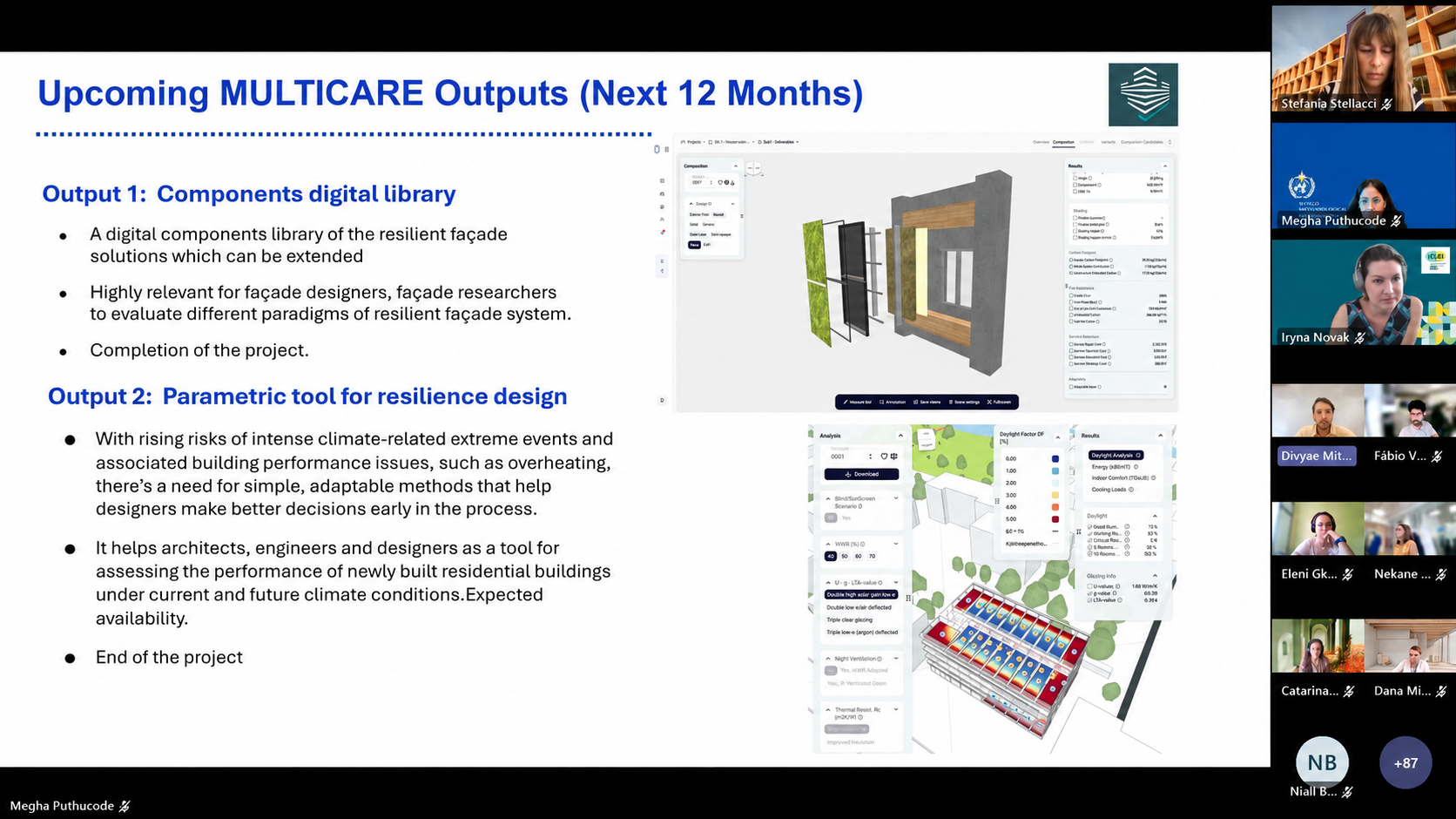
To compare design options, practitioners need information about the components they could use. MULTICARE’s digital component library is being developed to bring together facade options, material combinations and indicators describing their performance under different hazards.
The facade is a building’s outer skin. Choosing a facade system involves understanding its characteristics and how it may contribute to the performance of the building as a whole. In his presentation, Mittal described resilience indicators relating to heat, flooding and seismic hazards.
The library is intended to make this information available to facade researchers and designers, supporting the evaluation of facade systems in a multi-hazard context. Rather than considering a component only as a material or product choice, users would be able to explore it alongside information about resilience.
The two developments address connected needs: the library provides component information, while the parametric tool supports the exploration of design alternatives.
At the time of the webinar, both were under development. Mittal said they were scheduled to be available by the end of MULTICARE in September 2027. He also outlined plans to make the component library openly accessible through GitHub.
Why a useful tool must adapt to local risks
One of MULTICARE’s clearest messages emerged during the discussion: different demonstration sites have different resilience needs.
Mittal explained that a tool designed to work too generally can lose its practical value. To support users effectively, it needs enough flexibility to respond to a particular location and the hazards being considered.
The Amsterdam example illustrates this point. An assessment focused on overheating must reflect that concern. At another location, different hazards may require a different emphasis. Transferring a method therefore involves understanding which parts of the assessment need to change.
For practitioners, this is an important consideration when selecting or developing digital tools. A large number of design options is useful only when the assessment addresses the conditions that matter for the building.
MULTICARE’s contribution placed this adaptability at the centre of the discussion about wider use: tools need to respond to local challenges if they are to support decisions beyond the settings in which they were developed.
MULTICARE knowledge is informing further research
The webinar also provided an example of MULTICARE’s contribution to research beyond its own consortium.
Niall Buckley, representing MINORITY REPORT, explained that some methodologies used in that project originated in work undertaken in MULTICARE. He described how these approaches had evolved to help identify vulnerable parts of the built environment and communicate risks to a wider audience.
To illustrate MINORITY REPORT’s modelling approach, Buckley described exposing a building model to a heatwave, identifying weaknesses, introducing potential measures such as trees for shading or green roofs, and running the assessment again.
The example showed how research methods can develop across projects while addressing a shared practical need: understanding where a building is vulnerable and exploring how that vulnerability could be reduced.
Opening the tools to feedback and future collaboration
For MULTICARE, the exchange was also an opportunity to identify how other researchers and practitioners could contribute to the tools’ development.
Mittal invited feedback on the digital components and proposed workshops to gather input before the project ends. He also highlighted opportunities for joint workshops and policy-related exchanges, particularly around differences in national building standards and requirements.
This is relevant to the wider use of resilience tools. The cluster brings together expertise from different countries, creating opportunities to discuss the conditions under which approaches could be applied.
Mittal also raised the possibility of extending the component database with resilience indicators developed by other projects. Such contributions could broaden its content in the future. MULTICLIMACT, in turn, identified potential for exchanging knowledge about resilience indicators, including economic indicators.
The wider discussion reinforced why these connections matter. CLIMRES highlighted the need to consider the potential cost of taking no adaptation action, while RETIME and CARMINE stressed understandable information and continued user involvement. These perspectives provide useful context for developing tools that can support real decisions.
MULTICARE’s presentation connected three elements of that challenge: information about components, the ability to explore design alternatives and assessments that reflect local hazards. As development continues, feedback and exchanges with other projects offer opportunities to refine how these elements can help practitioners plan more resilient buildings.