MULTICARE Living Lab #1: Strong Start, Inspiring Discussions and What Comes Next
On 13 February, the first Living Lab of the MULTICARE project became much more than just a webinar. It turned into a lively exchange on how we can design buildings that are safer, smarter and ready for future climate challenges.
Experts, practitioners and stakeholders from across Europe joined the session to explore resilient buildings and digital design tools in practice. At peak attendance, 66 participants were connected, actively listening, asking questions and contributing to the discussion how to scale up the solution to other hazards!
The energy of the conversation was so strong that the session ran beyond the scheduled time. It became clear that multi-hazard resilience and low-carbon solutions for buildings are not abstract research concepts – they are urgent, real-world priorities that demand collaboration and practical action.
From Vision to Practice: Project Highlights and Key Takeaways
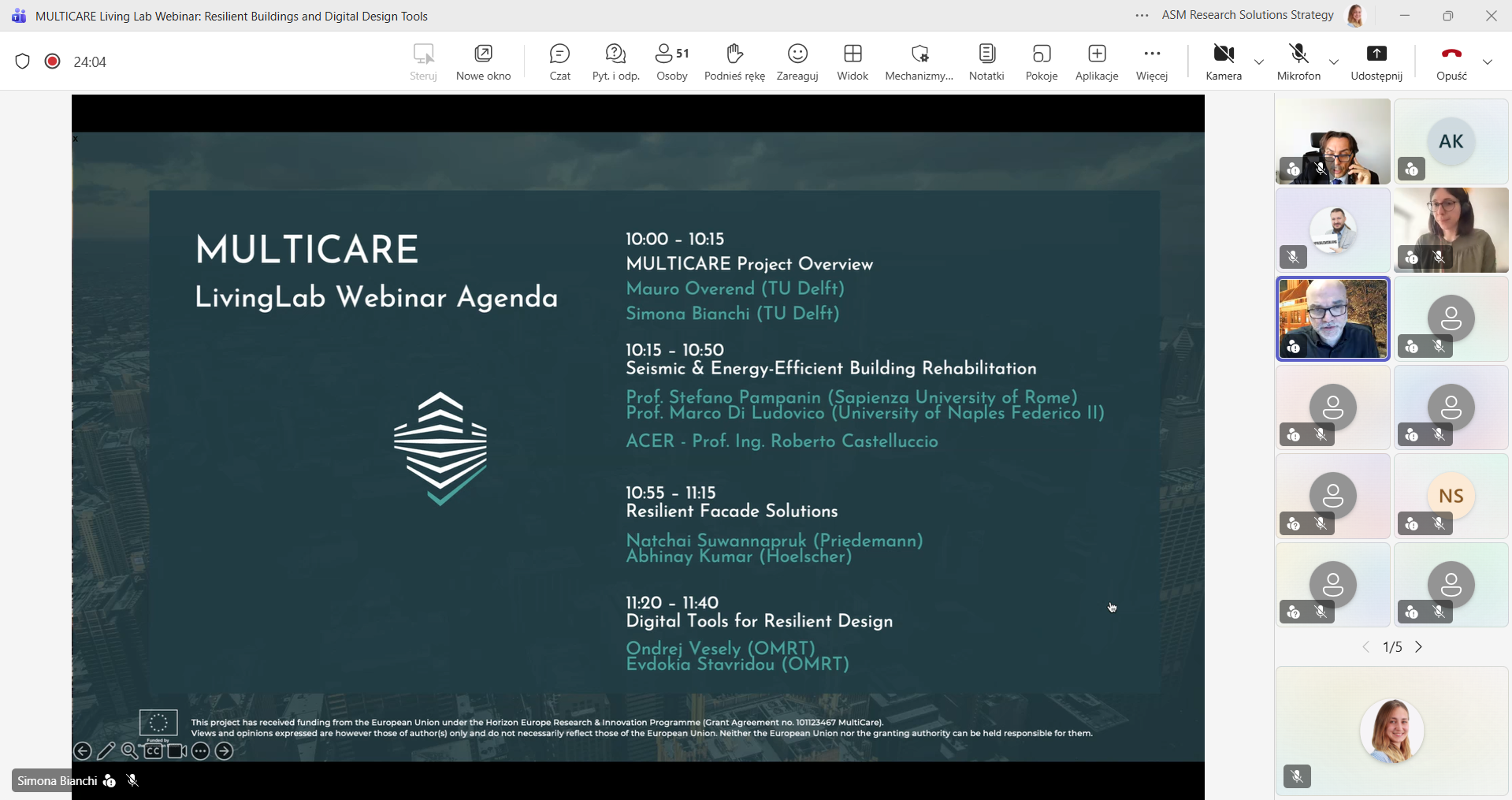
The webinar provided an overview of the MULTICARE vision and its current progress, presenting how the project addresses the urgent need to improve the resilience of the built environment against increasingly frequent and intense climate-related events.
MULTICARE develops multi-criteria decision-support frameworks combined with digital modelling tools that allow resilience assessment and optimisation across different scales – from materials and components to entire buildings and urban districts.
These tools are designed to support stakeholders in making informed decisions about retrofit strategies, monitoring systems and long-term resilience planning.
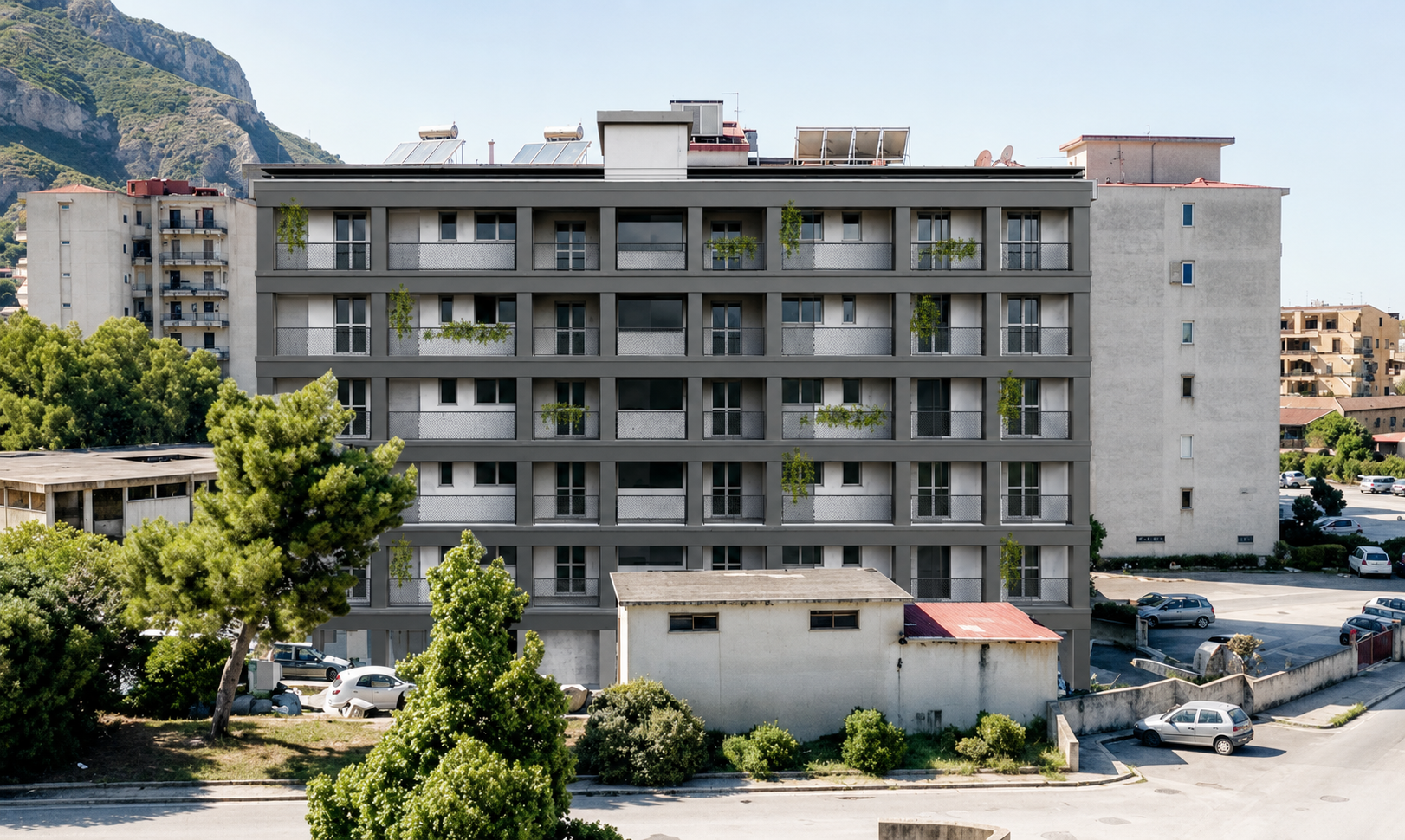
A central highlight of the session was the presentation of pilot activities, particularly the Acerra site in the Campania region of Italy. This residential social housing case demonstrates how MULTICARE solutions are tested under real-life conditions, addressing risks such as earthquakes, overheating, heavy rainfall and flash floods.
Through monitoring, simulation and tailored intervention strategies, the project aims to validate practical, scalable solutions that can be replicated in other European contexts.
Beyond technical innovation, the webinar also underlined the importance of financial feasibility, regulatory alignment and stakeholder engagement. Resilience is not only about engineering solutions – it requires integrated approaches that combine technology, digitalisation, socio-economic considerations and collaboration between public authorities, professionals and citizens.
We would like to sincerely thank all presenters for sharing their expertise and insights, and our moderator for guiding the discussion and ensuring an interactive and structured session.
We are equally grateful to everyone who joined the webinar, asked questions and contributed to the lively exchange. Reaching 66 participants at peak attendance during the very first Living Lab shows a strong interest in resilient and low-carbon solutions for the built environment.
Next Stop: Acerra Living Lab
The first Living Lab marks only the beginning of a broader stakeholder engaging process within MULTICARE.
Our next Living Lab will take place at the Acerra pilot site near Naples and will be organised in a hybrid format. This session will focus on local implementation activities and give stakeholders the opportunity to engage directly with pilot developments and real-life validation of MULTICARE solutions.
More details about the upcoming event will be shared soon on our website and social media channels.
Missed the Webinar? Watch the Recording
Resilience is built through collaboration, shared knowledge and continuous dialogue.
We look forward to continuing this journey together.